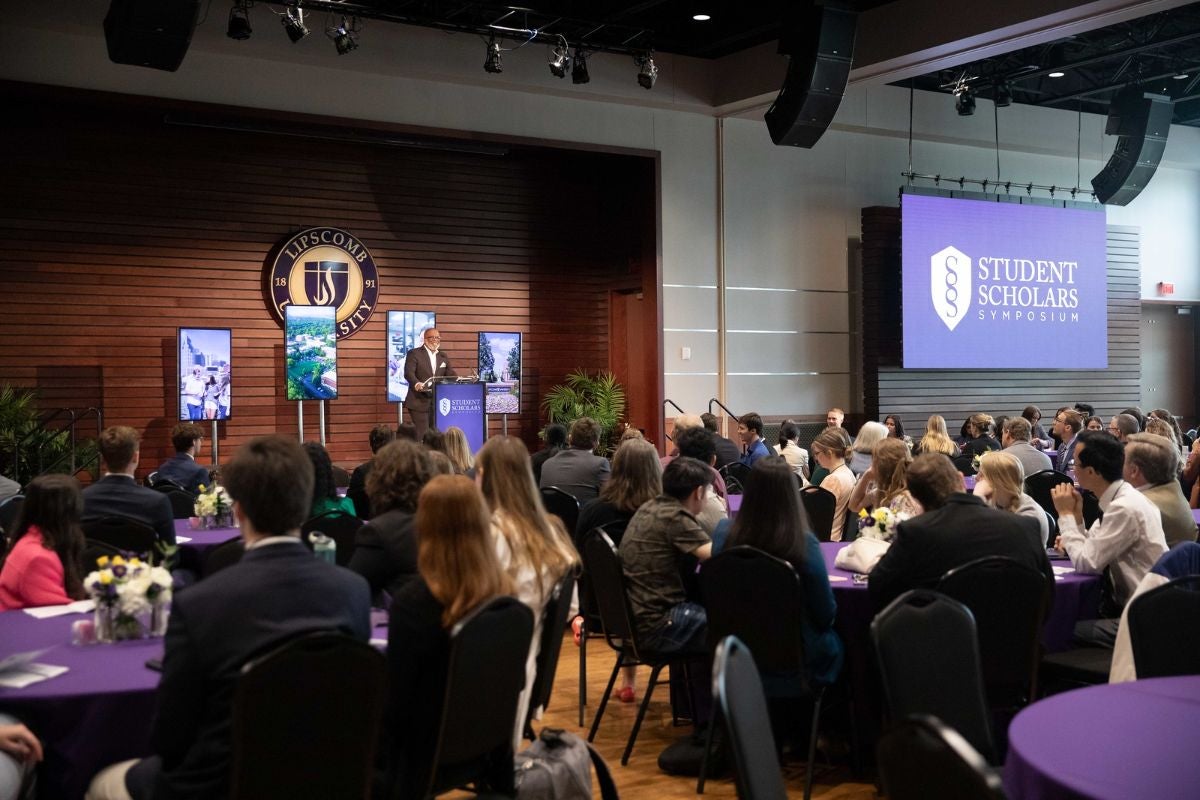
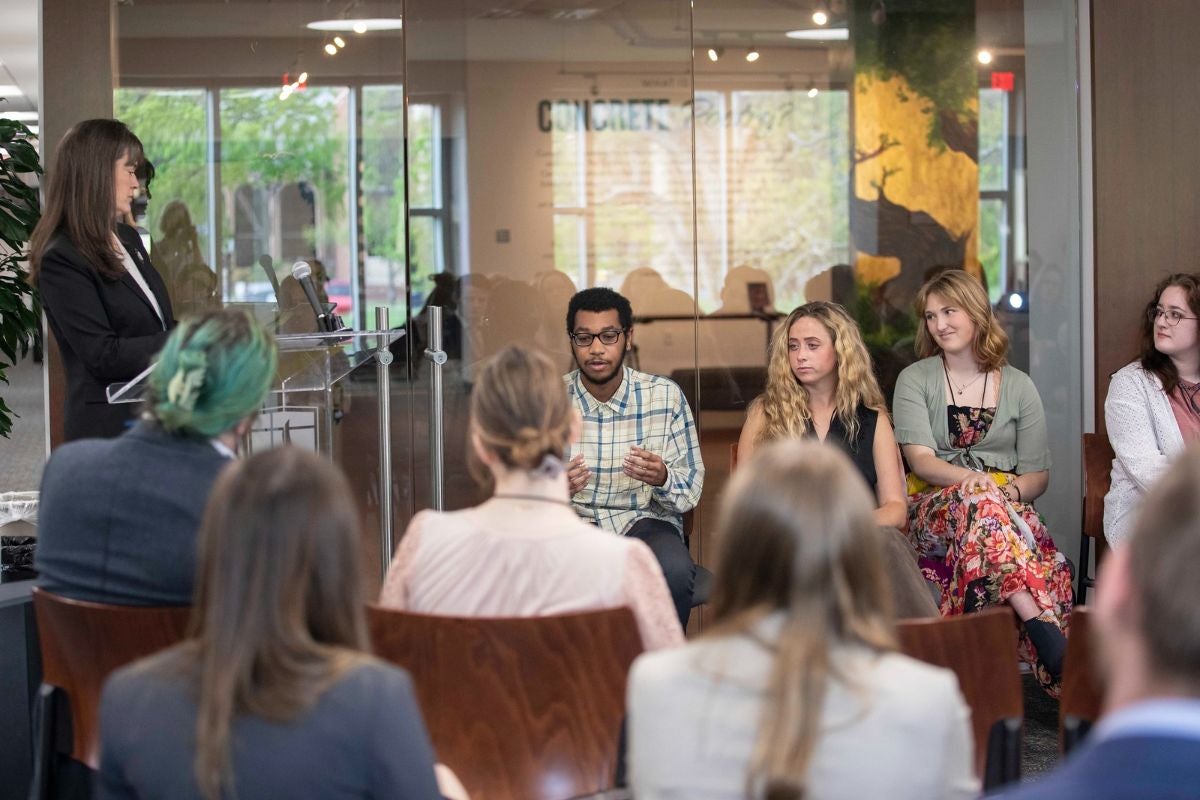
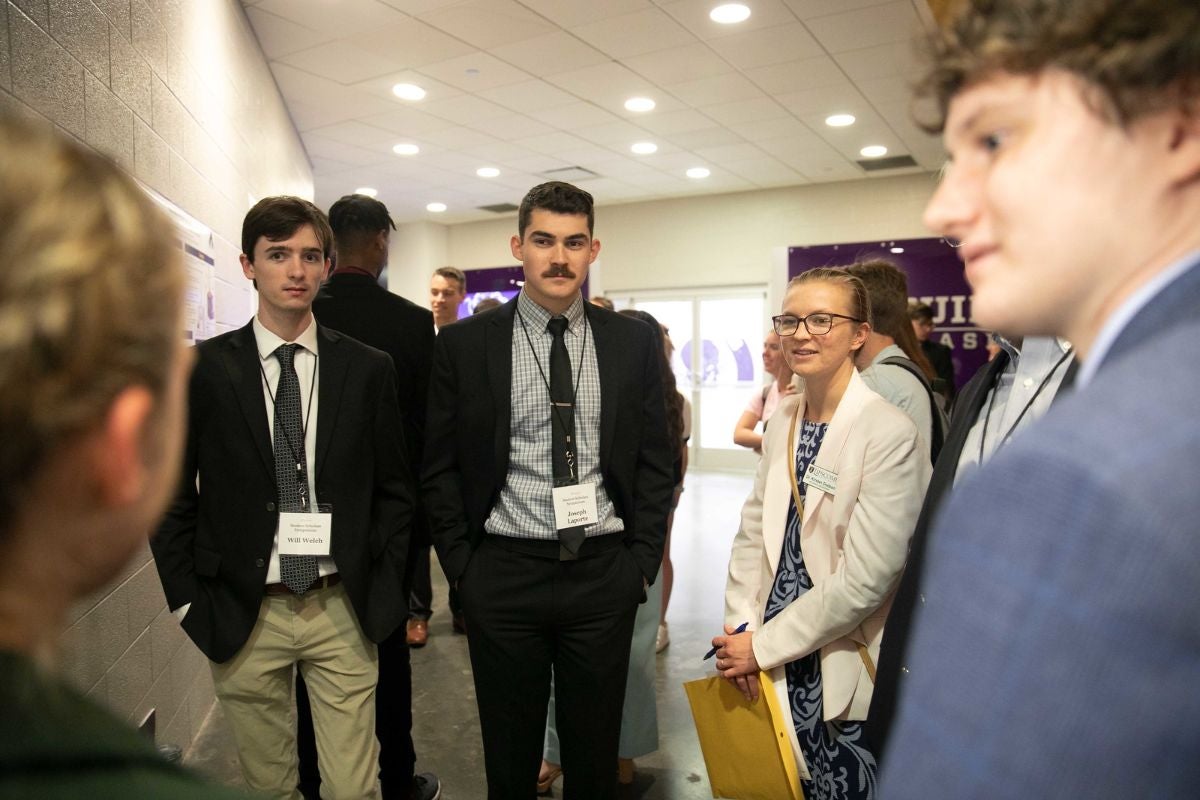
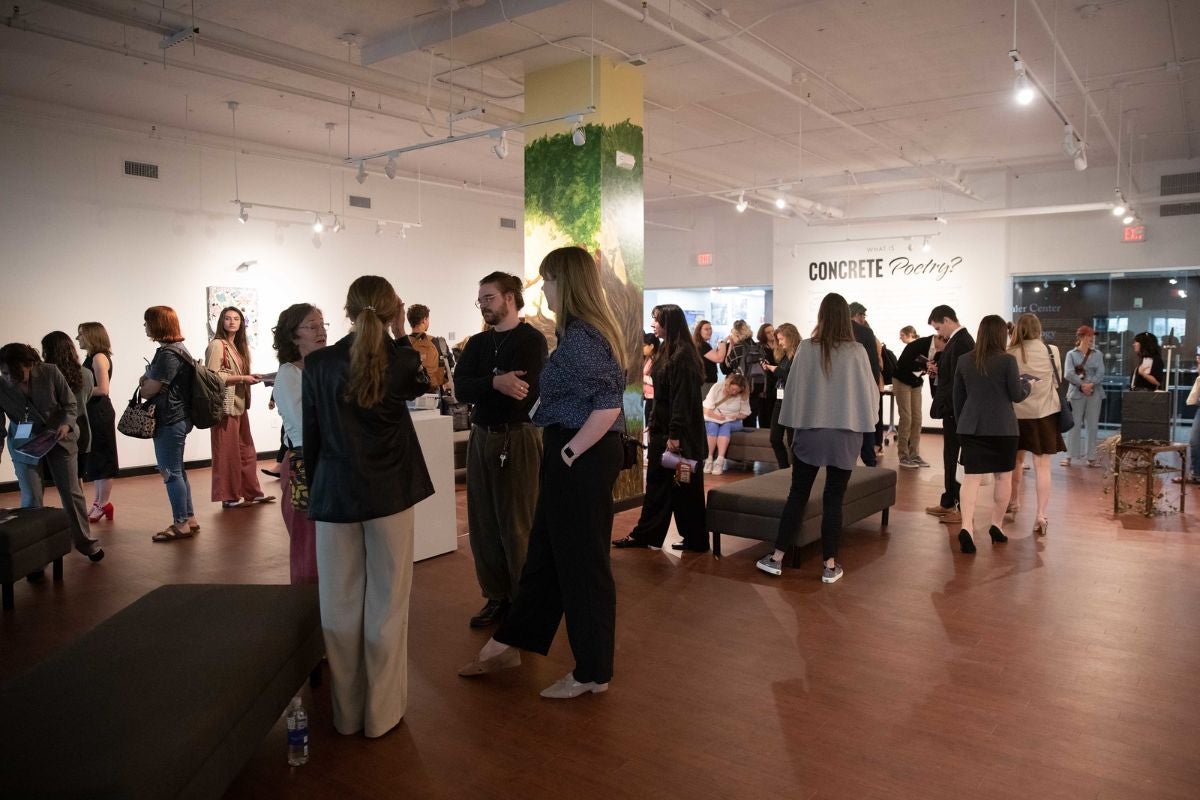
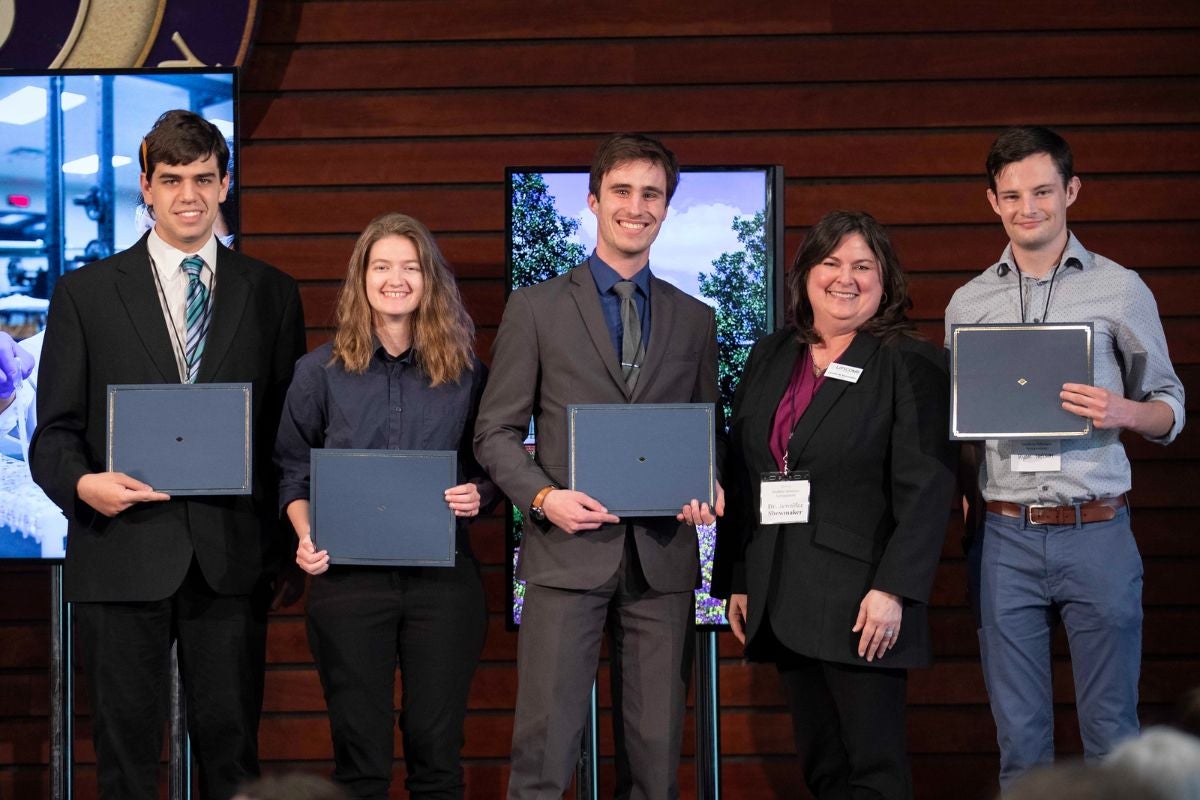
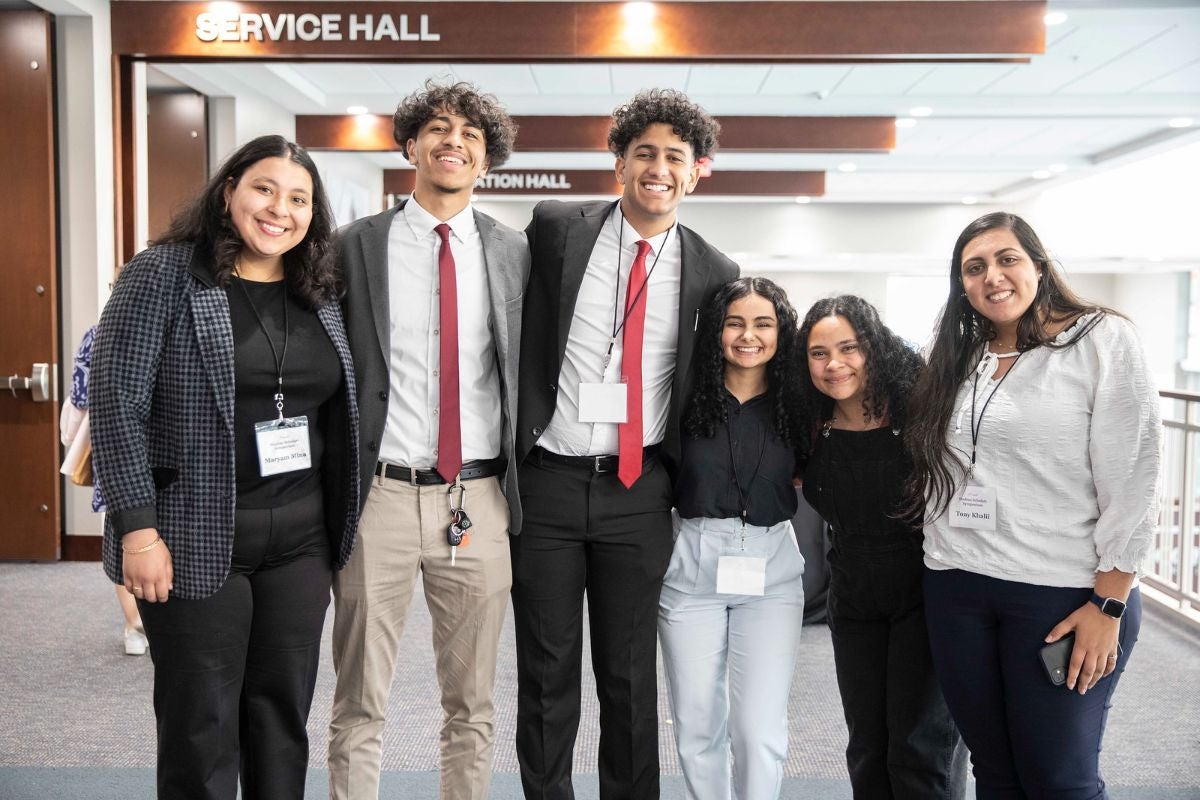
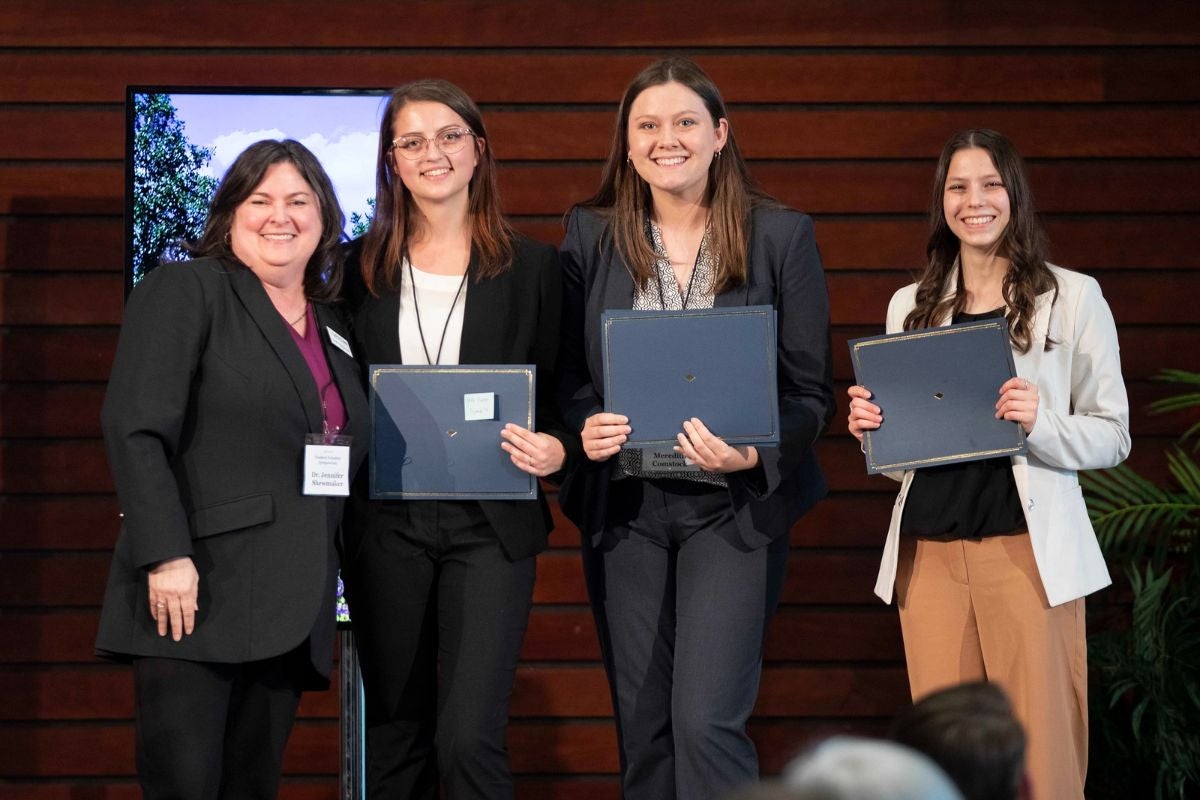
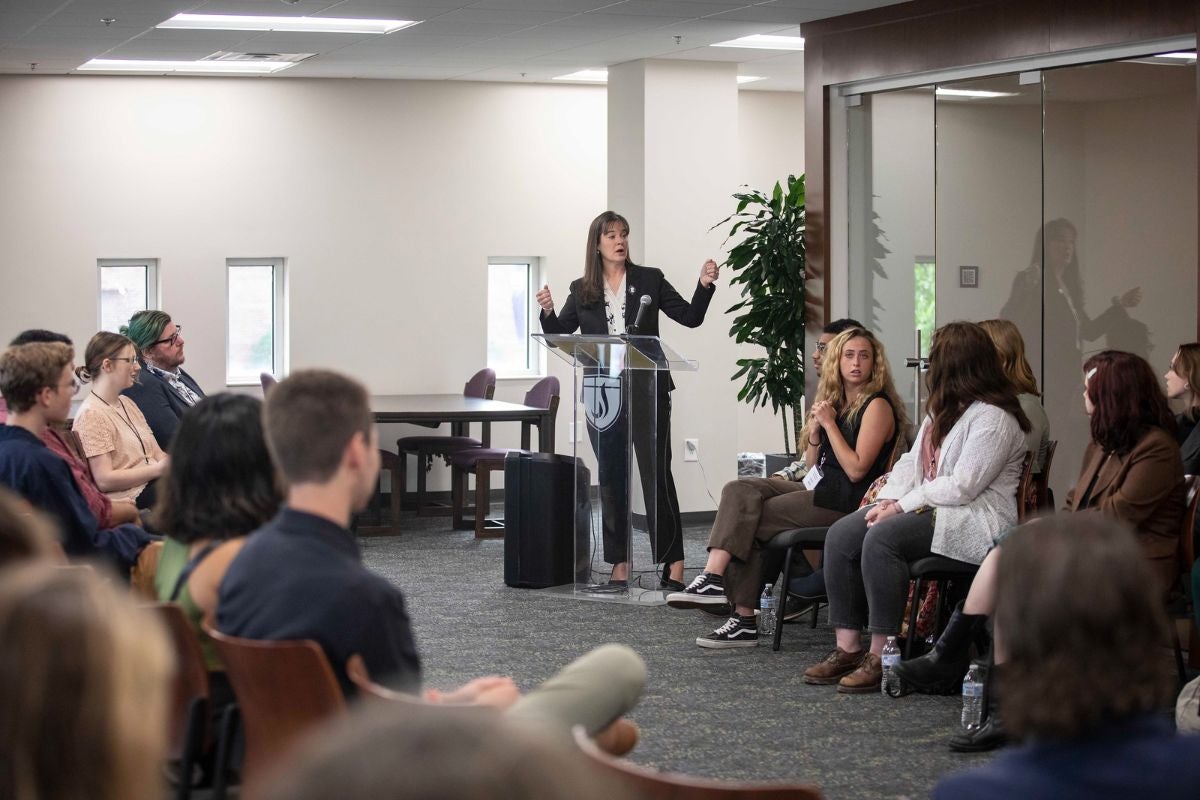
Student Scholars Symposium is sponsored by the Office of the Provost. This annual celebration of the creative and scholarly works of Lipscomb students is an interdisciplinary event representing the diversity of academia that makes up Lipscomb.
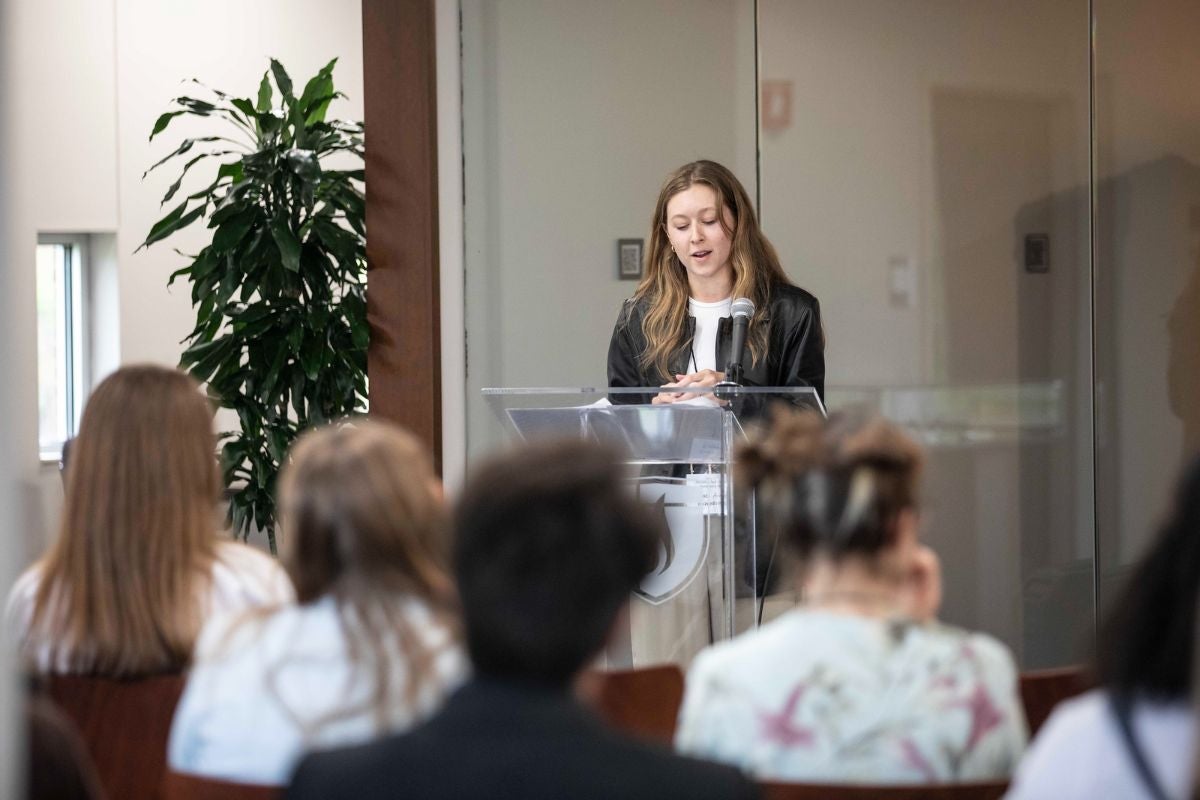
The 15th Annual Lipscomb University Student Scholars Symposium | April 15-16, 2026
We welcome presentations of empirical research of all types; readings/performances of original poetry, music, and theater; and exhibitions of artistic and scientific work. Students, consider presenting your original work and coming to celebrate the work of your classmates.
2026 Student Scholars Symposium Program
Student and Academic Highlights

Kai Lam and Ellie Griner (BS '26)
Thanks to a unique three-tier system designed to get more undergraduates into the lab conducting hands-on experiments earlier, Lipscomb’s biology department has more than 50 students each year conducting experiments and thinking deeper about thorny questions. In 2026, Ellie Griner (BS ’26) and Kai Lam, rising senior, have carried out much of the lab work to study the protein Neprilysin and its role in regulating breast cancer metastasis.
Read More
Cleiver Ruiz-Martinez
Lipscomb’s engineering college offers a robotics track for undergraduate students with introductory classes for robotics and artificial intelligence as well as an advanced robotics course that centers around research. Students learn through the current research literature and by implementing their ideas through coding. Cleiver Ruiz-Martinez worked with Assistant Professor Juan Rojas in the summer of 2025 to develop advanced coding for Lipscomb’s state-of-the-art Franka Research Robot.
Read More
Analytical Chemistry
Each year chemistry students are introduced to forensic analysis work at the Tennessee Bureau of Investigation (TBI) by having them compare the efficacy of two dried blood sample collection methods. Both could potentially be used for rapid on-site DUI testing in the future. This year, students detected fentanyl, oxycodone and ketamine in the samples using the first method, and methamphetamine, ketamine, oxycodone and cocaine in the samples using the second method.

Madouna Barsoum (BS '26) and Ryan Dunn (BS '26)
Seniors Madouna Barsoum and Ryan Dunn spent time in Advanced Physics Lab this semester learning how to use a Nuclear Magnetic Resonance (NMR) device and how to read the NMR spectra. They used a miniature version of an NMR device (somewhat similar to an MRI device at a hospital) to study spectra from organic and inorganic materials. Additionally, they determined the gyromagnetic ratios calculated from the Nuclear Magnetic Resonance spectra.

Teaching Best Practices
Four groups of education 15 students spent the spring semester analyzing children’s books for various themes and learning benefits, working to present at the Student Scholars Conference and to provide practical, easy-to-enact take-aways for teachers attending Global Voices, a professional development conference. Professor Emily Medlock worked with undergraduate students to explore children’s literature’s impact on learning math, analyzing 20 books to measure the books’ usefulness, ability to make connections to other subjects and how easy they are to understand.

Food Production
Students in the undergraduate food research course conduct both a scientific experiment and a sensory evaluation survey each year. In 2026, student groups chose to compare methods of keeping fresh apples from browning, the effects of flour type on texture and flavor in muffins and loaf breads, and the effects of alternative fats and sugars in brownies, among other topics. Students offered their experimental food items to taste tasters who ranked the items on sensory characteristics such as appearance, aroma and flavor.

Nursing Theory
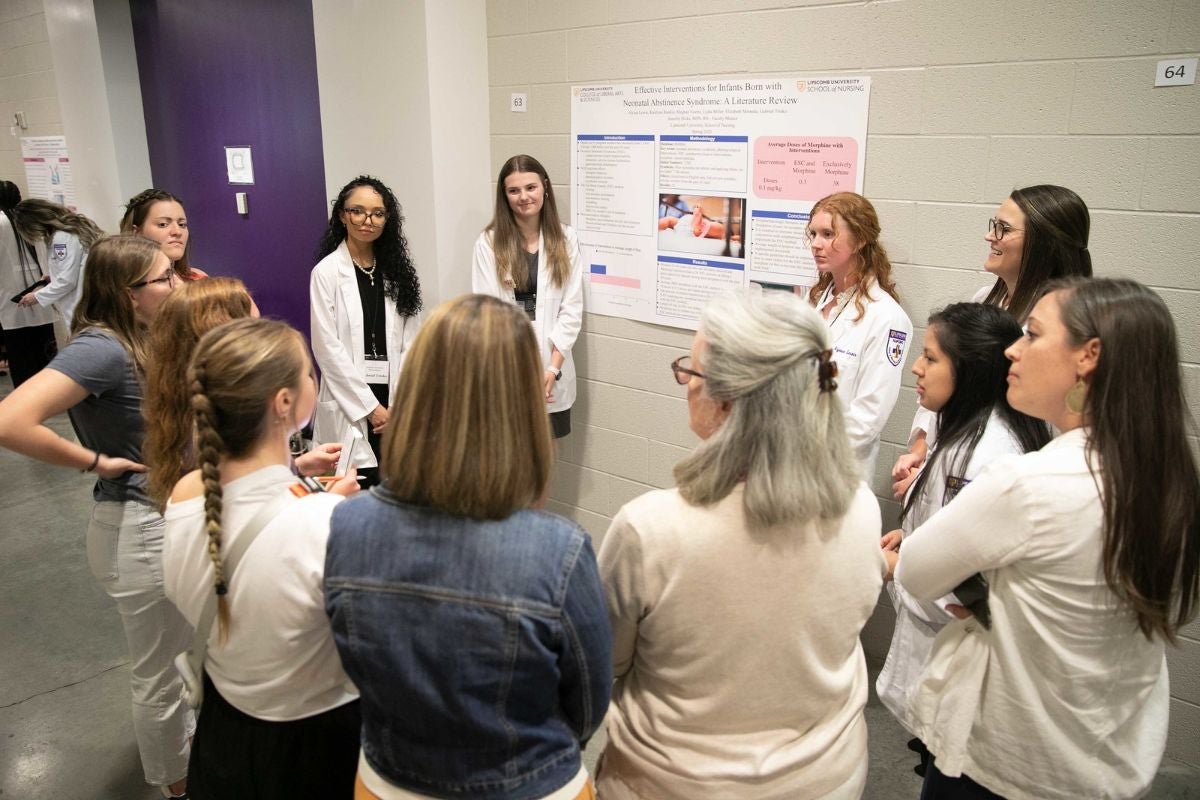
Every Lipscomb nursing student is required to take a nursing research and theory course to learn how to search for current literature by nurse scientists or other disciplines to answer questions about nursing care issues and to translate that knowledge into practice. In 2026, 43 students presented 11 scholarly review research posters on topics of interest including parental stress in the NICU, using AI for charting, pediatric oncology and trust in healthcare providers.